No products in the cart.
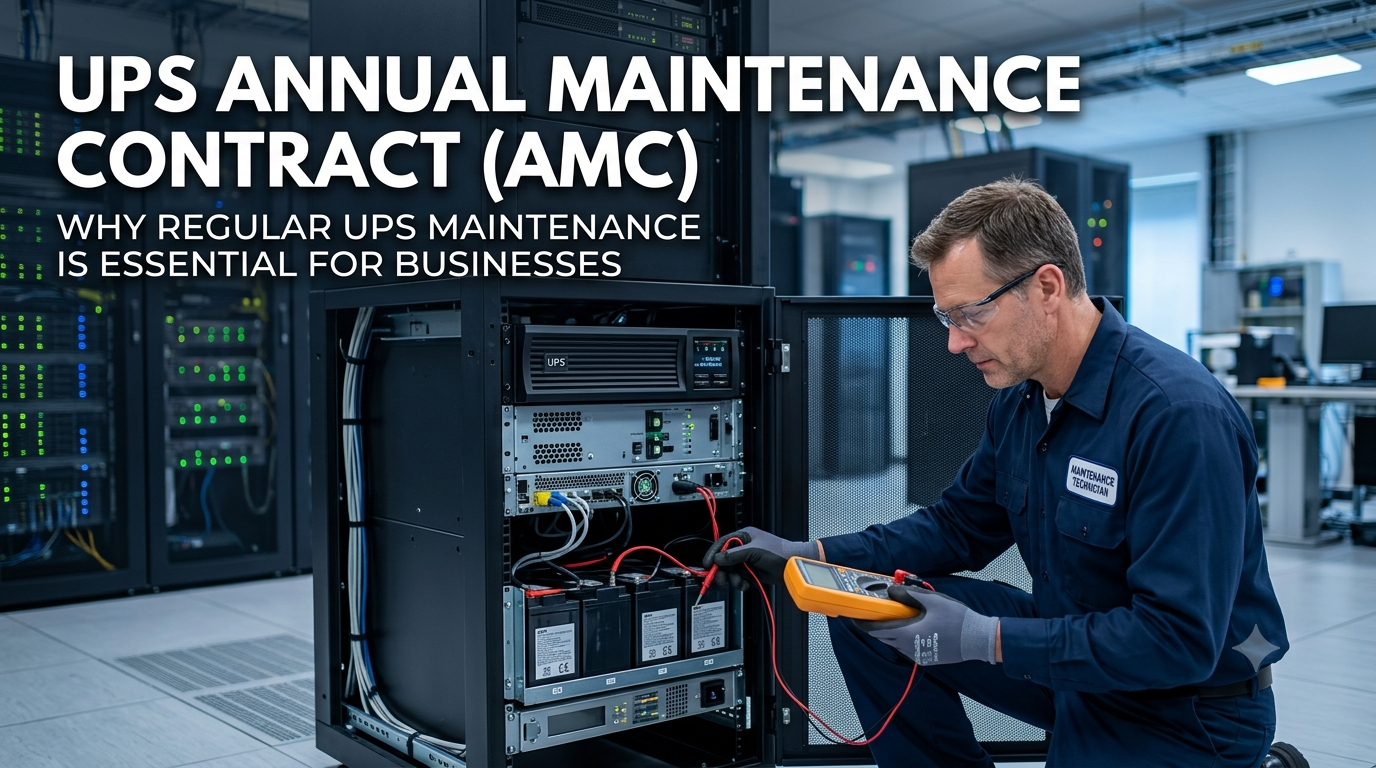
A reliable power backup system is essential for businesses that depend on computers, servers, networking equipment and other critical electrical systems. Unexpected power interruptions, voltage fluctuations and UPS failures can affect daily operations, cause equipment downtime and disrupt business continuity.
Installing a UPS is only the first step. Regular maintenance is equally important to keep the system operating reliably over time. This is where a UPS Annual Maintenance Contract (AMC) becomes valuable.
A UPS AMC helps businesses plan preventive maintenance, monitor equipment condition and arrange technical support according to their service requirements. In this blog, we explain what a UPS AMC is, its benefits, the services it may include and how to choose the right maintenance plan.
A UPS Annual Maintenance Contract is a service agreement between a business and a maintenance provider for the servicing and upkeep of its UPS equipment over an agreed period, typically one year.
Depending on the contract, the services may include scheduled inspections, preventive maintenance, battery health checks, troubleshooting and breakdown support.
A UPS AMC can be useful for offices, server rooms, data centres, manufacturing facilities, healthcare organisations and other environments where power interruptions can affect business operations.
The exact coverage depends on the selected plan, equipment specifications and agreed service terms.
A UPS failure during a power outage can interrupt critical operations. Regular maintenance helps identify potential issues before they develop into more serious problems.
Inspecting system components, reviewing alarms and checking battery condition can help businesses plan corrective action and reduce the risk of unexpected interruptions.
Batteries are among the most important components of a UPS system. Over time, their capacity can decline because of ageing, temperature conditions and charging or discharge cycles.
A maintenance plan may include battery inspections, health assessments and performance testing, depending on the contract.
Identifying battery deterioration early helps businesses plan replacement before backup performance becomes unreliable.
Dust accumulation, ventilation problems, loose connections and component ageing can affect UPS performance.
Scheduled preventive maintenance helps identify these issues and determine when cleaning, adjustments or repairs may be necessary. This supports better equipment management and can help avoid preventable failures.
Unexpected UPS breakdowns can result in unplanned repair expenses and operational disruption.
An AMC establishes agreed service responsibilities and costs for the contract period. This helps businesses plan maintenance budgets more effectively.
However, the coverage of spare parts, batteries, labour and emergency visits varies by contract, so these terms should be checked before signing.
UPS systems may require specialised knowledge for fault diagnosis, electrical testing and component servicing.
Depending on the agreement, an AMC may provide access to qualified service personnel, troubleshooting assistance and on-site maintenance support.
This can be especially useful for organisations managing multiple UPS units or critical power infrastructure.
The scope of a UPS maintenance contract depends on the provider and the selected service plan. Common services may include the following.
Preventive Maintenance
Scheduled maintenance visits help assess the overall condition of the UPS and identify potential operational issues.
Typical checks may include visual inspection, cleaning where appropriate, ventilation checks and a review of operating indicators.
Battery Health Assessment
Battery inspections help identify signs of ageing, abnormal conditions and reduced backup capability.
Depending on the agreement, battery testing may include voltage measurements, condition checks or approved discharge testing.
Electrical and Functional Checks
Technicians may inspect relevant input and output parameters, review system alarms and verify the operation of key UPS functions.
Testing should be performed according to manufacturer recommendations and the approved maintenance procedure.
Fault Diagnosis and Breakdown Support
If a UPS develops a fault, the service provider can investigate the problem and recommend corrective action under the agreed service terms.
Response times, repair timelines and emergency support availability should be clearly defined in the contract.
Spare Parts and Component Replacement
Some contracts cover specified spare parts and components, while others charge separately for replacements.
Before choosing an AMC, confirm whether batteries, fans, capacitors, control boards and other components are included or excluded.
Businesses should understand the difference between the two common types of maintenance contracts before making a decision.
| Feature | Comprehensive AMC | Non-Comprehensive AMC |
| Scheduled maintenance | As agreed in the contract | As agreed in the contract |
| Technical inspection | As agreed in the contract | As agreed in the contract |
| Breakdown support | According to contract terms | According to contract terms |
| Spare parts | Covered components included as specified | Generally charged separately |
| Battery replacement | Only if explicitly included | Generally charged separately |
| Cost structure | Usually higher due to broader coverage | Usually lower, with additional repair costs possible |
Important: These are general differences. Always review the actual contract because exclusions, labour charges, response times and replacement terms can vary.
Selecting an appropriate AMC requires more than comparing annual prices. Consider the following factors before finalising a service agreement.
A UPS AMC can benefit organisations where power reliability is important.
The appropriate maintenance plan depends on the criticality of the equipment, operating conditions and the organisation’s continuity requirements.
A UPS AMC should be viewed as part of a wider power protection strategy rather than simply an annual service expense.
Businesses should combine planned maintenance with appropriate UPS sizing, battery lifecycle management, suitable electrical installation and backup procedures.
For critical systems, maintenance should also be coordinated with operational teams to ensure that inspections and testing are carried out safely without creating unnecessary disruption.
A well-defined maintenance agreement helps clarify responsibilities, service coverage and escalation procedures before a fault occurs.
Choosing the right UPS and maintaining it properly are both important for reliable power protection. Businesses should consider their equipment requirements, backup needs and long-term maintenance arrangements when planning their power infrastructure.
CDS DigiMart offers power backup products, including APC UPS systems and Amaron Quanta battery products. Explore the available range to compare product specifications and identify solutions that suit your requirements.
Visit CDS DigiMart to explore available UPS and battery products.
For AMC requirements, confirm the applicable service scope and availability with the relevant service team before making a commitment.
What is covered under a UPS AMC?
Depending on the contract, coverage may include preventive maintenance, system inspections, battery health checks, troubleshooting and breakdown support. Spare parts and battery replacement may be subject to separate terms.
Is a comprehensive AMC better than a non-comprehensive AMC?
A comprehensive AMC may be suitable for businesses that want broader coverage of specified parts and repairs. A non-comprehensive AMC may suit organisations that prefer lower contract costs and can budget separately for spare parts. The right option depends on the equipment and contract terms.
How often should a UPS be serviced?
The recommended maintenance frequency depends on the UPS model, manufacturer guidance, operating environment and application criticality. Follow the manufacturer’s schedule and the maintenance agreement.
Does a UPS AMC include battery replacement?
Not necessarily. Battery inspection may be included, while replacement may be chargeable. Always confirm the battery coverage and exclusions in writing.
Can an old UPS be covered under an AMC?
This depends on the equipment’s condition, model, spare parts availability and the service provider’s acceptance criteria. An inspection may be required before the contract begins.
Conclusion
A UPS Annual Maintenance Contract helps businesses organise preventive servicing, monitor equipment condition and establish a clear process for handling faults. The right AMC can support equipment reliability, improve maintenance planning and reduce the risk of avoidable power-related disruptions.
Before selecting a contract, compare service coverage, preventive maintenance schedules, response times, spare parts terms and battery exclusions.
With suitable power backup equipment and a well-planned maintenance strategy, businesses can better prepare for unexpected power interruptions and protect their critical operations.


Leave a comment